Christian: The Strategic Asset for High-Impact Religious Branding
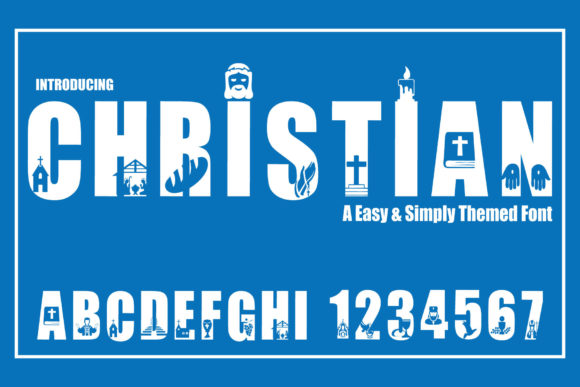
In the landscape of visual communication, typography is rarely just about legibility; it is a fundamental component of brand strategy and psychological positioning. When you introduce Christian, a thick lettered, distinct, and religious display font, into your workflow, you are not merely selecting a typeface. You are deploying a strategic asset designed to command attention and convey authority within specific contexts. For entrepreneurs, marketers, and creators operating in the faith-based sector or those seeking to evoke a sense of tradition and gravitas, the decision to use Christian can instantly elevate the perceived value of your creations.
The market is saturated with generic serif and sans-serif options that often blend into the background. To stand out, especially when communicating messages rooted in heritage, spirituality, or community, one requires a tool that carries inherent weight. This is where the unique characteristics of Christian become invaluable. Its thick strokes and distinct form create an immediate visual anchor, ensuring that your core message is not just read, but felt. Whether you are designing a church program, a marketing campaign for a religious organization, or a branding package for a faith-aligned business, the intentional application of this font serves as a catalyst for better results.
Defining the Strategic Value of Christian
To understand why Christian should be part of your design toolkit, one must look beyond its aesthetic appeal and consider its functional utility. As a display font, its primary function is to capture attention within seconds. In a digital environment where users scan content rapidly, a thick, distinct typeface acts as a visual stopper. It breaks the monotony of standard body text and signals importance.
The "religious" classification of this font is not merely a stylistic label; it implies a cultural resonance. It taps into a shared understanding of solemnity, respect, and timelessness. For professionals such as educators, publishers, and small business owners, leveraging this association can streamline communication. When a viewer encounters Christian, they subconsciously prepare for content that is significant. This psychological priming reduces friction in the user experience, allowing your message to land with greater impact.
Furthermore, the thickness of the letterforms offers a practical advantage in various media. In large-scale print applications like banners, signage, or stage backdrops, thin fonts often lose detail or appear fragile. Christian maintains its structural integrity at any scale, ensuring that your branding remains robust whether viewed from a distance on a billboard or up close on a brochure. This reliability is crucial for maintaining professional standards across all touchpoints of your operations.
Enhancing Planning and Positioning Through Typography
Strategic planning involves more than just setting goals; it requires aligning every output with the desired market position. If your goal is to position a church or ministry as a pillar of stability and strength, using a delicate script or a modern, airy sans-serif might send mixed signals. Christian aligns perfectly with objectives that prioritize trust, legacy, and clear leadership.
Consider the scenario of a church leader planning a major outreach initiative. The collateral materials need to reflect the seriousness of the mission while inviting participation. By utilizing Christian for headlines and key call-to-actions, the team creates a cohesive narrative before a single word of copy is read. This alignment between visual tone and strategic intent ensures that the audience receives a unified message. It eliminates the cognitive dissonance that occurs when a bold message is wrapped in weak design.
For freelancers and agency owners, this font offers a competitive edge. Clients in the non-profit and religious sectors often struggle to find designers who understand their specific nuances. Offering Christian as a recommended solution demonstrates expertise and insight. It shows that you are not just applying random styles but are making deliberate choices to support their long-term vision. This level of thoughtful consultation builds stronger client relationships and leads to higher retention rates.
Practical Applications for Creators and Professionals
The versatility of Christian allows it to serve multiple roles within a comprehensive branding ecosystem. However, its power lies in restraint and intentionality. Overusing any display font can dilute its impact, so understanding the specific use cases is essential for achieving optimal outcomes.
- Event Promotion: For sermons, conferences, or community gatherings, Christian excels in creating urgency and excitement without sacrificing dignity. Use it for dates, times, and speaker names to ensure these critical details are impossible to miss.
- Digital Presence: On websites and social media, the font works best as a hero element. A strong headline featuring Christian can increase click-through rates by visually separating the post from the feed. It signals to the reader that the content following is substantial and worth their time.
- Print Media: Brochures, bulletins, and donor reports benefit from the font's readability and presence. In printed materials, the ink coverage of thick letters adds a tactile quality that feels premium, reinforcing the value of the organization producing them.
- Merchandising: Apparel and swag items require designs that hold up over time. Christian provides a classic look that avoids fleeting trends, ensuring that t-shirts, mugs, and bags remain relevant and wearable for years.
When integrating this font into your workflow, consider the hierarchy of information. Let Christian handle the heavy lifting of establishing the theme, while pairing it with clean, neutral body fonts for detailed instructions or theological texts. This contrast creates a balanced composition that guides the eye naturally through the content.
Navigating Risks and Contextual Considerations
While Christian is a powerful tool, relying on it without clear goals can lead to unintended consequences. One of the primary risks of using a distinct display font is the potential for visual fatigue. If every line of text uses this heavy style, the design becomes overwhelming and difficult to read. The distinctiveness that makes it effective in headlines renders it unsuitable for long-form paragraphs.
Another consideration is the context of the message. While the font evokes tradition and faith, it may feel out of place in settings requiring a modern, progressive, or casual tone. Decision-makers must evaluate whether the gravity of Christian matches the spirit of the specific project. Using it for a lighthearted community event might inadvertently make the occasion seem overly formal or somber. Strategic thinking dictates that the font choice must always serve the emotional resonance of the content.
Additionally, there is the risk of misinterpretation if the font is used in isolation. Without supporting visual elements like color, imagery, and layout, the font alone cannot communicate the full story. It is a partner in communication, not the sole narrator. Successful implementations always pair Christian with complementary design elements that reinforce the intended message.
Mastering Intentional Usage for Long-Term Results
Achieving better results in branding and communication requires a shift from reactive design to proactive strategy. Instead of asking "What font looks good?", ask "What does this font achieve?" When you approach Christian with this mindset, you transform it from a simple aesthetic choice into a driver of business outcomes.
Start by defining the core objective of your project. Are you trying to build trust? Attract new members? Educate a congregation? Once the goal is clear, assess if the personality of Christian supports it. If the answer is yes, proceed with confidence. If the answer is no, explore other options that better align with your strategic vision.
Consistency is another pillar of successful implementation. Once you decide to use Christian as a primary display font, commit to it across your various channels. Consistent use reinforces brand recognition and helps your audience identify your organization instantly. Whether it is a website header, a newsletter subject line, or a physical sign, the recurring presence of Christian builds a cumulative effect that strengthens your brand identity over time.
For educators and bloggers, this consistency aids in learning and retention. Readers develop a mental model of your content based on its visual cues. When Christian consistently signals important announcements or thematic shifts, your audience learns to anticipate and engage with those sections more deeply. This improves the overall user experience and fosters a loyal community.
Ultimately, the success of Christian depends on the wisdom of the user. It is a tool that rewards thoughtfulness and punishes carelessness. By treating it with the respect due to a high-value asset, you ensure that your communications are not only seen but remembered. In a world of noise, clarity and distinction are the ultimate currencies. Christian provides the means to secure both, provided it is wielded with strategic precision and a clear understanding of your goals.
As you move forward with your next project, take a moment to visualize how Christian could transform your message. Imagine the difference it makes when your title commands the room, when your poster stops the scroll, and when your brand speaks with a voice that is unmistakably yours. That is the power of intentional design. That is the result of choosing the right tools for the job. With Christian, you have a distinct advantage in bringing your vision to life.