Reclaiming Digital Nostalgia with MultiType Pixel Bold
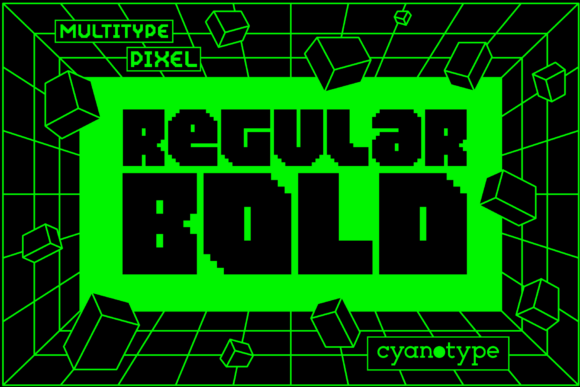
In an era where web design often drifts toward the ultra-minimalist or the fluidly animated, there remains a distinct hunger for structure that screams authenticity. Enter MultiType Pixel Bold, a typeface that refuses to blend into the background. This is not merely a font; it is a statement piece designed for creators who understand that typography can dictate the emotional temperature of a digital space. By leveraging a unique aesthetic rooted in 8-bit culture but refined for modern screens, this font bridges the gap between retro gaming nostalgia and contemporary graphic design trends.
The core allure of MultiType Pixel Bold lies in its specific construction as a display font. Unlike body text fonts which prioritize legibility at small sizes through subtle curves and open counters, display fonts are built to be seen from a distance or used as large focal points. This font capitalizes on that requirement by offering a cool, uniquely shaped, pixelated appearance that demands attention. Whether you are a developer building a portfolio site, a marketer launching a campaign for a youth-oriented brand, or an educator creating engaging slide decks, the presence of this typeface signals a deliberate choice to stand out.
The Technical Architecture of PUA Encoding
One of the most significant advantages of using MultiType Pixel Bold over standard bitmap fonts is its underlying encoding system. Traditional pixel fonts often suffer from limited character sets, restricting users to basic alphanumeric characters. However, MultiType Pixel Bold utilizes Private Use Area (PUA) encoding. This technical distinction is crucial for designers seeking versatility without the hassle of installing multiple font files or dealing with broken glyphs.
PUA encoding allows the font to access all available glyphs and swashes with ease, bypassing the standard Unicode limitations that often restrict specialized symbols. When you engage with this font, you are unlocking a vast library of stylistic alternates that would otherwise require complex CSS manipulation or image overlays. This means that a single file provides the robustness needed for professional workflows. You can insert decorative elements, special punctuation marks, and unique graphical swashes directly into your text stream without breaking the layout or sacrificing the crisp, pixelated integrity of the design.
- Seamless Integration: Access specialized characters without external plugins.
- Design Freedom: Utilize swashes to add flair to headlines and logos.
- Consistency: Maintain a unified visual language across different platforms.
This level of control is particularly valuable for researchers and data visualization experts who need to present information in a way that is both visually stimulating and technically accurate. The ability to manipulate the glyph set ensures that even the most intricate designs remain functional and accessible.
Applications in Modern Branding
The utility of MultiType Pixel Bold extends far beyond simple text rendering. In the realm of branding, the "distorted and trendy touch" mentioned in its description serves as a powerful differentiator. Brands today are constantly fighting for consumer attention in a saturated market. A logo or headline rendered in this font immediately captures the eye due to its unconventional geometry.
Consider the use case for a tech startup or a creative agency. These entities often wish to project an image of innovation while acknowledging their roots in code and logic. Using MultiType Pixel Bold for key marketing materials creates an immediate association with digital craftsmanship. It suggests that the company understands the underlying technology while remaining playful and approachable. For business owners, this translates to a memorable brand identity that sticks in the consumer's mind longer than generic sans-serif alternatives.
Furthermore, the font's bold weight makes it ideal for call-to-action buttons and navigation bars. In user interface (UI) design, the goal is to guide the user's journey. A distorted, pixelated button stands out against a clean, white, or dark background, signaling interactivity. This is not just about aesthetics; it is about guiding user behavior through visual hierarchy. The sharp edges and high contrast inherent in the pixelation ensure that these interactive elements are easily distinguishable.
Cross-Disciplinary Relevance for Professionals and Hobbyists
The beauty of MultiType Pixel Bold is its adaptability across diverse professional sectors. It is not confined to the niche world of game development. Instead, it serves as a versatile tool for a broad spectrum of users, from educators to hobbyists.
Educational Tools and Engagement
Educators often struggle to maintain student engagement in an environment filled with digital distractions. Incorporating MultiType Pixel Bold into presentation slides, worksheets, or educational apps can transform dry content into something resembling a video game interface. This gamification of learning materials can increase motivation and retention rates among students who resonate with digital culture. The font acts as a bridge, making complex subjects feel more accessible and less intimidating.
For example, a history teacher presenting a module on the Industrial Revolution could use the font to style headers related to machinery and factory output, evoking a sense of mechanical precision. Similarly, a computer science instructor teaching the basics of binary code could utilize the pixelated nature of the font to reinforce the lesson's content visually. The alignment between the medium and the message is a hallmark of effective communication.
Content Creation and Social Media
Content creators on platforms like YouTube, Instagram, and TikTok are always looking for ways to differentiate their thumbnails and graphics. MultiType Pixel Bold offers a ready-made solution for creating eye-catching text overlays. The distorted shapes and unique curves provide a trendy edge that aligns perfectly with current social media aesthetics, which often favor bold, high-contrast visuals.
Hobbyists involved in DIY projects, crafting, or independent publishing also find value in this typeface. Whether designing a zine, a poster for a local event, or a custom sticker, the font allows individuals to produce professional-grade work without expensive design software subscriptions. The availability of swashes via PUA encoding means that even those with limited design experience can create sophisticated layouts by simply swapping standard letters for stylized variants.
Web Development and Implementation
For web developers, implementing MultiType Pixel Bold is straightforward yet impactful. Because it is a display font, it is best used sparingly to avoid readability issues. The optimal workflow involves using this font for H1 and H2 tags, while relying on highly legible sans-serif fonts for paragraph text. This combination ensures that the site remains accessible to all users, including those with visual impairments, while still delivering a strong visual punch.
Developers can leverage the PUA encoding to create dynamic effects. Imagine a website header that changes its character set based on user interaction, revealing hidden symbols or swashes upon hover. This interactivity adds a layer of depth to the user experience, turning a static page into an engaging exploration. The font's structure supports these animations well, as the pixelated grid holds its shape even when manipulated.
Strategic Considerations for Design Implementation
While MultiType Pixel Bold is a powerful asset, it requires strategic implementation to be effective. The very characteristics that make it cool—its distortion and pixelation—can become liabilities if overused. The key to successful application lies in balance and context.
Readability vs. Style: The primary rule of typography is communication. If the audience cannot read the text quickly, the design has failed. Therefore, reserve MultiType Pixel Bold for short phrases, headlines, and emphasis. Avoid using it for long-form content. The human eye processes blocky, pixelated shapes differently than smooth curves, leading to faster fatigue during extended reading sessions.
Contextual Harmony: Ensure that the font complements the overall design system. A distorted, trendy font pairs exceptionally well with minimalist backgrounds, high-contrast color schemes, and geometric imagery. Clashing it with ornate, Victorian-style patterns or soft, watercolor textures may result in visual dissonance. The goal is to create a cohesive narrative where the typography enhances the message rather than competing with it.
Accessibility Standards: As professionals, we have a responsibility to create inclusive designs. While MultiType Pixel Bold is visually striking, it is essential to test it against accessibility guidelines. Ensure sufficient color contrast between the text and the background. Provide fallback fonts for users whose systems do not support the specific PUA encoding, ensuring that the content remains readable even if the specific glyphs do not render correctly.
The Future of Pixel Aesthetics
The resurgence of pixel art and retro-futurism in design is not a fleeting trend; it is a reflection of our cultural relationship with technology. We are living in a time where digital artifacts are becoming more prevalent, and our appreciation for the "raw" mechanics of early computing is growing. MultiType Pixel Bold sits at the forefront of this movement, offering a tool that honors the past while serving the needs of the future.
As the digital landscape evolves, the demand for fonts that offer character and personality will only increase. Standardized, corporate typefaces are losing their monopoly on professional communication. Brands and individuals alike are seeking voices that sound authentic. By adopting a font like MultiType Pixel Bold, designers are participating in a broader cultural shift towards expressing individuality and creativity in the digital sphere.
Conclusion: A Tool for Distinct Expression
In summary, MultiType Pixel Bold represents more than just a collection of letterforms. It is a comprehensive solution for anyone looking to inject energy, nostalgia, and technical sophistication into their visual projects. Its PUA encoding unlocks a world of possibilities, allowing for seamless integration of swashes and specialized glyphs that elevate design quality. From educators seeking to engage students to business owners aiming to capture market share, the applications are limitless.
By understanding the strengths and limitations of this unique typeface, users can harness its power to create meaningful, impactful, and memorable designs. Whether you are distorting a headline to make a statement or using a swash to add a touch of elegance, MultiType Pixel Bold provides the canvas for your creativity. In a world of uniform digital experiences, choosing this font is a bold step towards defining your own unique path.
Embrace the pixel. Embrace the distortion. Let MultiType Pixel Bold be the voice of your next great project.