Arriven: A Comprehensive Evaluation of a Vintage Display Font for Modern Designers
In the rapidly evolving landscape of digital and print design, selecting the right typography is often the most critical decision a creator makes. It dictates the tone, readability, and overall aesthetic impact of a project. Among the myriad of options available to designers aged 20 to 50 who value distinctiveness, Arriven has emerged as a compelling choice for those seeking a cool, indie-styled, and vintage display font. This typeface is not merely a collection of characters; it is a tool designed to evoke nostalgia while maintaining modern usability.
Understanding what Arriven brings to the table requires looking beyond standard font categories. Unlike generic serif or sans-serif fonts that aim for neutrality, Arriven is purpose-built to stand out. Its unique character set, PUA encoding, and stylistic swashes offer a level of customization that many standard commercial fonts lack. For professionals evaluating resources for branding, editorial layouts, or creative projects, this distinction is vital. The following analysis explores the capabilities of Arriven, compares its utility against broader typographic approaches, and outlines specific scenarios where it serves as an optimal solution versus when alternative strategies might be required.
Defining the Unique Character of Arriven
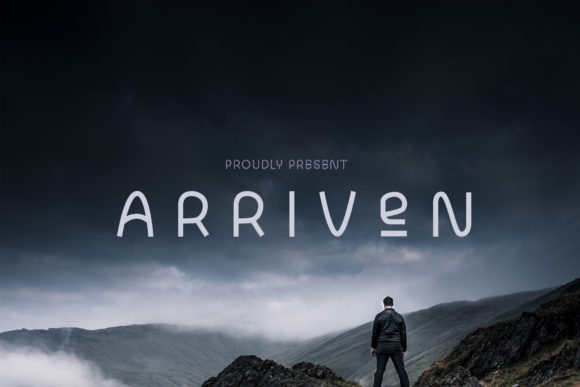
At its core, Arriven represents a specific intersection of retro aesthetics and contemporary functionality. The "indie" label often applied to this font suggests a handcrafted feel, reminiscent of mid-20th-century posters, underground zines, and vintage packaging. However, the true differentiator lies in its technical architecture. Arriven is PUA (Private Use Area) encoded. In the world of typography, this is a significant feature that separates it from standard Unicode fonts.
Standard fonts are limited by the fixed mapping of characters defined by the Unicode standard. While this ensures cross-platform compatibility, it often restricts the number of stylistic alternates, ligatures, and decorative elements a designer can access without complex workarounds. With Arriven, the PUA encoding allows the entire glyph set—including elaborate swashes, alternate letterforms, and specialized ornaments—to be mapped directly into the software's keyboard layout. This means that accessing these unique visual elements is as simple as pressing a specific key combination.
This accessibility changes the workflow significantly. Instead of navigating through complex OpenType panels or manually inserting special characters via a symbol map, a designer can add these decorative flourishes with ease. This efficiency is particularly valuable for artists working under tight deadlines who still demand a high degree of artistic flair. The result is a typeface that feels organic and fluid, allowing the creator to let their imagination guide the visual hierarchy without being bogged down by technical limitations.
The Visual Language of Vintage and Indie Styles
The aesthetic of Arriven is rooted in the past but executed with precision suitable for modern screens. It captures the essence of vintage display types, which were historically used for headlines, advertisements, and event posters. These fonts were designed to grab attention immediately. Arriven maintains this aggressive, eye-catching quality while avoiding the common pitfalls of older fonts, such as poor legibility at small sizes or inconsistent stroke weights.
The "cool" factor associated with Arriven comes from its irregularities. In a digital age dominated by perfectly geometric and uniform typefaces, the slight imperfections and human touch of Arriven provide a refreshing contrast. It breaks the monotony of standard web content. When integrated into a layout, it signals creativity, personality, and a departure from corporate blandness. This makes it an excellent candidate for projects that need to communicate authenticity, such as artisanal brands, music festivals, independent publications, or lifestyle blogs.
Evaluating Arriven Against Standard Typographic Options
When comparing Arriven to other typographic solutions, it is helpful to categorize the alternatives into two main groups: standard system fonts and other specialty display fonts. Each category presents different tradeoffs regarding versatility, cost, and ease of use.
Comparison with System Fonts
Most operating systems come pre-loaded with a suite of standard fonts like Arial, Helvetica, Times New Roman, or Roboto. These are safe choices. They are universally recognized, load instantly on all devices, and ensure maximum readability across various screen resolutions. However, they lack the distinctive voice that Arriven provides. If a project aims to blend in with the background rather than lead the conversation, system fonts are appropriate. But if the goal is to create a memorable brand identity or a striking poster, relying on default fonts often results in a generic look. Arriven offers a path away from this homogeneity, providing a specific mood that standard fonts simply cannot replicate.
Comparison with Other Specialty Fonts
The market is saturated with vintage-inspired fonts. Many rely on standard Unicode mappings or require third-party plugins to access their full potential. Some of these alternatives may have more extensive kerning pairs or better support for multiple languages. However, they often lack the seamless integration of the PUA encoding found in Arriven. For designers who prioritize speed and direct control over glyph selection, the PUA approach of Arriven offers a streamlined experience. It reduces the friction between concept and execution. While other fonts might offer a wider range of weights (light, regular, bold, black), Arriven focuses on depth within its primary style, ensuring that every variation contributes to the cohesive vintage-indie narrative.
Tradeoffs and Limitations to Consider
No single typeface is perfect for every situation, and Arriven is no exception. The primary limitation of using a PUA-encoded font is portability. Because the glyphs are mapped to private areas of the code, there is a risk that if the file is transferred to a system where the font is not installed or if the PUA mapping is altered, the text may revert to default characters or become unreadable. This necessitates careful file management, such as outlining text in vector graphics software before final export or embedding fonts strictly according to licensing agreements.
Furthermore, Arriven is a display font. By definition, display fonts are optimized for large sizes—headlines, titles, and short phrases. They are generally unsuitable for body copy or long-form reading. Attempting to use Arriven for paragraphs of text would likely result in fatigue for the reader due to the decorative nature of the letters. This is a crucial distinction for designers to make early in the process. The font excels when used sparingly to anchor a design, but it should not be the backbone of a document intended for sustained reading.
Determining the Best Fit for Your Project
Deciding whether to incorporate Arriven into a project depends heavily on the specific goals of the communication. The decision-making process should weigh the desired emotional response against practical constraints like budget, timeline, and technical requirements.
When Arriven is the Right Choice
Arriven is ideally suited for projects that require a strong visual hook. Imagine a cover design for a vinyl record, a promotional banner for a craft beer launch, or a title sequence for a short film. In these contexts, the font's ability to convey a specific era and attitude is paramount. The swashes and alternate glyphs allow for dynamic compositions where the text itself becomes part of the illustration. For indie musicians, boutique clothing lines, or coffee shops aiming for a hipster aesthetic, Arriven provides an instant connection with the target audience. It communicates that the brand values craftsmanship and uniqueness.
Additionally, for designers who enjoy a hands-on approach to typography, Arriven offers a playground. The ability to mix and match swashes with ease encourages experimentation. You can create custom logotypes or adjust the rhythm of a headline without needing advanced graphic design skills. This democratization of high-end typographic effects is one of its greatest strengths.
When to Choose an Alternative
There are clear scenarios where Arriven would be a poor fit. If you are designing a financial report, a medical website, or a legal document, the playful and vintage nature of Arriven undermines the necessary sense of authority and clarity. In these cases, a neutral, highly legible sans-serif or a traditional serif is a safer and more professional bet. Similarly, if your project requires extensive multilingual support, you must verify that Arriven covers the necessary character sets, as niche display fonts sometimes have limited language support compared to major open-source families.
Finally, consider the medium. While Arriven looks stunning in print and high-resolution digital formats, its intricate details might get lost on low-resolution mobile screens or in very small sizes. If the design needs to scale down to a favicon or a tiny app icon, a simpler version of the font or a completely different typeface might be necessary to maintain recognition.
Maximizing Value Through Strategic Application
To truly leverage the potential of Arriven, designers should view it as a strategic asset rather than just a decorative element. The PUA encoding is a powerful feature that, when understood correctly, saves time and enhances creativity. By adding it confidently to favorite creations, users can generate outcomes that feel bespoke and carefully curated.
Practical application involves layering. Pairing Arriven with a clean, minimalist sans-serif can create a beautiful balance. The vintage flair of Arriven draws the eye, while the neutral companion font ensures the message remains readable. This juxtaposition allows the designer to tell a story: the Arriven represents the heritage or the soul of the brand, while the supporting font represents its modern reliability.
Ultimately, the choice of typography is a reflection of the designer's intent. Arriven stands out in the crowded marketplace of fonts because it respects the user's desire for expression while providing the technical tools to realize that vision quickly. Whether used for a personal portfolio, a client project, or a community initiative, it offers a versatile palette for those willing to explore the nuances of vintage design. By understanding its strengths, acknowledging its limitations, and applying it with intention, creators can produce work that resonates deeply with audiences who appreciate the charm of the past and the energy of the present.