Beat of Drum: The Quirky Choice That Elevates Your Design
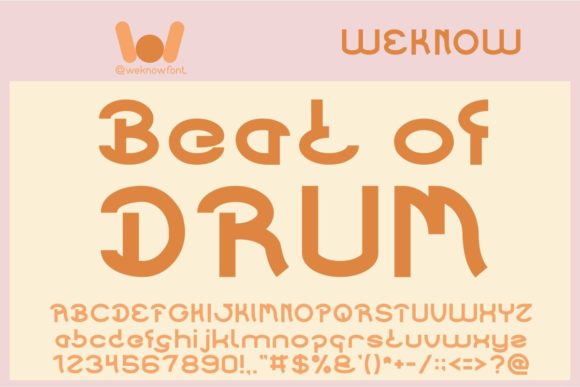
If you are looking for a display typeface that demands attention without shouting, Beat of Drum is likely the missing piece in your visual toolkit. This quirky and cool display font features uniquely shaped letters that immediately set it apart from standard sans-serifs or elegant serifs. Because of its distinct character, it will easily match a wide range of creations that require a specific, memorable touch. Whether you are designing a concert poster, a brand logo for a creative agency, or a social media graphic for a local event, this font offers a personality that generic options simply cannot replicate.
However, while the aesthetic appeal of Beat of Drum is undeniable, using it effectively requires more than just selecting it from a menu. Many designers and content creators fall into the trap of assuming that "unique" automatically means "better." In reality, the wrong application can lead to poor readability, a disjointed brand identity, or a design that feels chaotic rather than curated. Understanding the nuances of this typeface is essential for anyone who wants to leverage its strengths while avoiding common pitfalls.
Why Distinct Shapes Matter (and When They Don't)
The primary allure of Beat of Drum lies in its unconventional letterforms. These shapes are designed to catch the eye, creating an immediate emotional response. For entrepreneurs and small business owners, this can be a powerful tool for differentiation. If your goal is to stand out in a crowded market, a font with such a strong voice helps communicate creativity and boldness instantly.
Yet, a frequent mistake occurs when users try to apply this font to body text or long-form content. Because the characters are so stylized, they lack the subtle consistency required for reading paragraphs of text. Using Beat of Drum for anything other than headlines, logos, or short captions often results in fatigue for the reader. The brain has to work harder to decode the unique shapes, which breaks the flow of information. This directly impacts usability and efficiency; if your audience struggles to read your message, the quality of your communication suffers regardless of how beautiful the design looks.
To avoid this, reserve the font for high-impact areas where brevity is key. Use it for titles, pull quotes, or key selling points on a landing page. Let a neutral, highly legible sans-serif handle the supporting text. This contrast not only highlights the uniqueness of Beat of Drum but also ensures your overall layout remains professional and accessible.
Evaluating Licensing Before You Download
Another area where professionals often stumble involves licensing and usage rights. When searching for a free download or a premium asset, it is easy to overlook the fine print regarding commercial use. Some versions of unique fonts like Beat of Drum may be restricted to personal projects only. Ignoring these terms can lead to legal complications, unexpected costs, or the need to redesign assets after a campaign has already launched.
Before making a decision, always check the specific license agreement provided by the foundry or distributor. Ask yourself: Can I use this for a client project? Is there a limit on the number of impressions? Does the license cover web embedding or app integration? Failing to verify these details can affect your cost structure and create unnecessary risk for your business. A responsible approach involves budgeting for the correct license upfront rather than risking infringement later.
Pitfalls in Pairing and Hierarchy
Even when used correctly as a headline, Beat of Drum requires careful pairing. A common error is trying to pair it with another display font that is equally busy. This creates visual noise where the viewer does not know where to look first. The result is a presentation that feels cluttered and unprofessional, reducing the perceived value of the product or service being advertised.
Instead, adopt a strategy of balance. Since Beat of Drum is loud and expressive, your secondary fonts should be quiet and understated. Think of it as a musical arrangement: if the drums are playing a complex rhythm, the bass and guitar should provide a steady foundation, not compete for the same frequency. By pairing this font with a clean, geometric sans-serif or a simple serif, you allow the unique shapes to shine without overwhelming the design.
- Avoid overuse: Limit the use of Beat of Drum to one or two lines per design element.
- Check spacing: Unique shapes often have irregular spacing. Adjust kerning manually to ensure the letters breathe properly together.
- Consider context: Ensure the font matches the tone of your industry. It might be perfect for a music festival but inappropriate for a law firm or medical clinic.
Optimization for Digital Screens
In the digital age, how your font renders on different devices is critical. Highly stylized fonts can sometimes suffer from pixelation or blurring on smaller screens, particularly if the file format is not optimized. Users might assume the design is low-quality because the edges of the letters look jagged. This affects satisfaction and trust; if your branding looks broken on a mobile phone, potential customers may question the professionalism of your entire operation.
To mitigate this, ensure you are using the correct file formats for web delivery, such as SVG or optimized WOFF2 files. Test your designs at various zoom levels and on different screen resolutions before publishing. If the font appears too heavy or thick on a small display, consider adjusting the weight or scaling down the size slightly. These technical adjustments ensure that the distinct touch of Beat of Drum translates clearly across all platforms.
Making the Right Decision for Your Project
When evaluating whether Beat of Drum is the right choice, ask yourself what story you are trying to tell. If the goal is to convey tradition, stability, or corporate reliability, this font might send the wrong signal. However, if you aim to evoke energy, fun, or artistic flair, it becomes an excellent ally. The key is alignment between the visual style and the intended message.
Don't rely solely on the initial preview. Create a mockup with your actual content to see how the font interacts with your specific copy. Sometimes a font looks great in isolation but clashes with the length of your headlines or the complexity of your logo. Taking the time to test these combinations prevents costly revisions later. By focusing on practical application and understanding the limitations of the typeface, you can harness its full potential.
Ultimately, Beat of Drum is a tool for those willing to take a calculated risk on their design. It rewards thoughtful usage with a distinctive identity that resonates with audiences. Avoid the mistakes of overuse, poor pairing, and neglecting technical details. Instead, embrace its quirks strategically to create work that is not just seen, but remembered.