Why Lobyan is the Modern Choice for Minimalist Typography
In an era where digital screens are saturated with cluttered interfaces and overwhelming visual noise, the demand for clarity has never been higher. Designers, developers, and content creators are increasingly turning away from ornate, decorative typefaces that distract from the message. Instead, they are seeking solutions that prioritize legibility, structure, and a clean aesthetic. This shift has brought a specific category of typography to the forefront: the minimalist display font. Among these options, Lobyan stands out as a distinctive tool that balances simplicity with character.
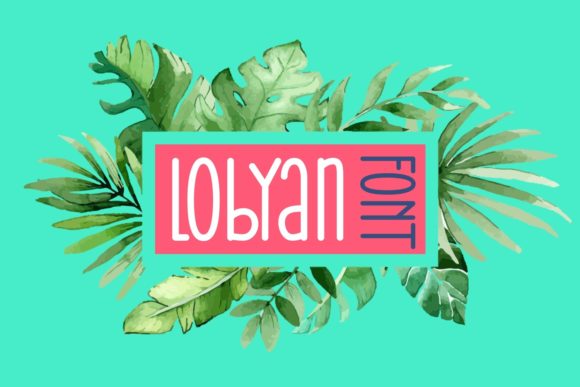
Lobyan is a cool, thin and minimalist display font. Due to its simple style, this font will fit a variety of design ideas, so add it confidently to any creation, and you will love the results. But what makes a font like Lobyan truly effective beyond its surface appearance? How does it serve different professional sectors, and why is it becoming a staple in modern web and print design? To understand the value of this typeface, we must look at its structural integrity, its psychological impact on the reader, and its practical application across diverse media.
The Anatomy of Cool Simplicity
Typography is often described as the voice of a design. When a font is "cool," it implies a certain detachment or modernity that feels current without chasing fleeting trends. When it is "thin," it suggests elegance, lightness, and a lack of visual weight. When it is "minimalist," it denotes a reduction to essential forms, stripping away unnecessary flourishes to reveal the core structure of the letterforms.
Lobyan embodies all three of these attributes simultaneously. The thin strokes create a sense of airiness, allowing the eye to travel across headlines and titles with minimal friction. This characteristic is particularly valuable in long-form content or high-density information displays where heavy fonts can cause cognitive fatigue. The minimalist approach ensures that the letters do not compete with images, data, or other graphical elements. Instead, they act as a supportive framework that guides the user's attention exactly where it needs to go.
This specific combination of traits makes Lobyan versatile. It avoids the rigidity often associated with geometric sans-serifs while maintaining enough structure to remain readable at various sizes. The result is a typeface that feels both sophisticated and accessible, capable of elevating a basic layout into something that looks professionally curated.
Visual Weight and Readability
One of the primary challenges in using thin fonts is maintaining readability, especially on lower-resolution screens or in low-light conditions. A poorly executed thin font can become illegible or appear broken. However, Lobyan demonstrates a mastery of stroke contrast and spacing. The designers have likely optimized the counter-space (the open area inside letters like 'o' or 'e') to ensure that even at smaller sizes, the characters remain distinct.
This balance allows Lobyan to function effectively as a display font, which typically means it is used for large text such as headlines, posters, and banners. Yet, its internal logic is robust enough that it can be scaled down for subheadings or navigation menus without losing its identity. For professionals who need a single font family to handle multiple hierarchy levels within a project, this versatility is invaluable.
Applications Across Professional Sectors
The utility of a font like Lobyan extends far beyond mere decoration. Its ability to fit a variety of design ideas stems from its neutral yet expressive nature. Different industries require different visual tones, and Lobyan adapts to meet those specific needs through context and pairing.
For Business Owners and Branding
In the corporate world, branding is about communication. A company that wants to project innovation, efficiency, and modernity often avoids traditional serif fonts that might feel old-fashioned. Lobyan offers a sleek alternative that signals forward-thinking. When used on a landing page for a tech startup or a consulting firm, the thin lines suggest precision and attention to detail.
Business owners looking to refresh their brand identity might find that replacing a standard Arial or Helvetica with Lobyan instantly modernizes their digital presence. The "cool" factor mentioned in its description adds a layer of personality that generic fonts lack, helping brands stand out in crowded marketplaces without resorting to loud colors or chaotic layouts.
For Educators and Researchers
Academic and educational materials often suffer from being visually dense and intimidating. Complex research papers, lecture slides, and online course materials can benefit greatly from typography that reduces visual stress. By using Lobyan for headers and key concepts, educators can break up walls of text and make information more digestible.
The minimalist style of Lobyan aligns well with the scientific method: clear, direct, and free of unnecessary ornamentation. It respects the integrity of the data and the argument presented. For researchers publishing white papers or creating infographics, Lobyan provides a professional canvas that allows charts and graphs to take center stage while ensuring the accompanying text remains authoritative yet approachable.
For Creators and Hobbyists
Digital creators, including graphic designers, illustrators, and hobbyist photographers, are constantly searching for tools that allow for creative expression without technical limitations. Lobyan serves as a flexible foundation for these projects. Whether designing a portfolio website, creating social media graphics, or crafting a personal blog, the font's adaptability is a major asset.
Hobbyists often work with limited resources and time. A font that requires little adjustment to look good is a significant advantage. Because Lobyan fits a variety of design ideas, users do not need to spend hours tweaking kerning or finding complex pairings. Adding it confidently to any creation yields immediate results, allowing the creator to focus on the content itself rather than the mechanics of the typeface.
The Psychology of Thin Lines
Why does the thickness of a font matter? In visual perception, thick lines convey strength, stability, and sometimes aggression. Thin lines, conversely, communicate delicacy, speed, and refinement. This psychological association is crucial when designing for specific audiences.
When a user encounters Lobyan on a screen, their brain processes the information differently than it would with a bold, heavy font. The reduced visual weight lowers the perceived "effort" required to read the text. This subtle psychological cue can increase engagement rates, as users are less likely to bounce off a page that feels inviting and light.
Furthermore, the minimalist aesthetic taps into the modern desire for organization and order. In a chaotic digital environment, a clean, uncluttered interface created by a font like Lobyan provides a sense of calm. This is particularly relevant for wellness apps, lifestyle blogs, and luxury goods marketing, where the atmosphere of the site is just as important as the products being sold.
Contrast and Hierarchy
The effectiveness of Lobyan is often amplified when paired with bolder typefaces. This technique creates a strong visual hierarchy. Imagine a headline in Lobyan followed by a paragraph of body text in a heavier, more robust sans-serif. The contrast draws the eye immediately to the title, establishing the topic, before guiding the reader down to the details.
This dynamic interplay allows designers to control the reading flow. The thinness of Lobyan ensures that it does not overpower the supporting text, while its unique character prevents the design from feeling too sterile. It acts as the perfect bridge between the bold statement and the detailed explanation.
Implementation Strategies for Optimal Results
To get the most out of Lobyan, users should consider how it interacts with their overall design system. While the font is versatile, it performs best when given the space to breathe. Crowding thin letters together can negate their elegant qualities, making them appear cramped and difficult to read.
- Whitespace Management: Increase line height and margin spacing around Lobyan headings. The thin strokes require more negative space to maintain their visual integrity and prevent them from bleeding into adjacent elements.
- Color Selection: High-contrast color combinations work best. Pairing Lobyan with dark gray or black on a white background ensures maximum legibility. Using pastel or light colors with thin fonts can sometimes reduce contrast below accessibility standards.
- Sizing Considerations: As a display font, Lobyan shines when used at larger sizes. If using it for body text, ensure the size is sufficient to maintain the clarity of the thin strokes. It is generally recommended to use it for headlines, subheads, and pull quotes rather than long paragraphs.
- Pairing Partners: Since Lobyan is minimalist, it pairs well with a wide range of fonts. A classic serif like Garamond or a sturdy geometric sans-serif like Futura can complement its modern edge. The key is to choose a partner that shares a similar level of sophistication.
Adapting to Future Trends
Design trends are cyclical, but the move toward minimalism appears to be a long-term shift driven by the increasing complexity of digital life. Users are becoming more adept at filtering information quickly; they want to know what is important immediately. Fonts that facilitate this rapid processing are becoming more essential.
Lobyan represents a sustainable choice in this landscape. Unlike trendy fonts that may date quickly, the fundamental principles of minimalism—clarity, function, and simplicity—are timeless. By adopting a font like Lobyan now, professionals future-proof their designs against the next wave of visual clutter.
Moreover, as web technologies evolve to support higher resolution displays and variable fonts, the potential for thin, delicate typefaces will only increase. Lobyan is positioned perfectly to take advantage of these advancements, offering crisp rendering on Retina displays and adaptive weights that can adjust to different viewing contexts.
Conclusion: A Tool for Clarity
The journey through the world of typography reveals that every pixel counts. In the quest for effective communication, the choice of font is one of the most critical decisions a designer makes. Lobyan emerges as a powerful ally in this pursuit. Its cool, thin, and minimalist profile offers a solution that is both aesthetically pleasing and functionally superior.
Whether you are a business owner crafting a brand narrative, an educator simplifying complex data, or a creator looking to elevate your portfolio, Lobyan provides the flexibility needed to succeed. Its simple style allows it to fit a variety of design ideas, ensuring that it never clashes with your vision. By adding it confidently to any creation, you are not just choosing a typeface; you are committing to a standard of clarity and elegance that resonates with modern audiences.
The results speak for themselves. Designs featuring Lobyan tend to feel more intentional, more polished, and more engaging. As we continue to navigate an information-saturated world, the ability to cut through the noise with a clean, confident voice is a superpower. Lobyan gives you that voice, ready to be heard.