Silly Kids: The Playful Display Font for Creative Projects
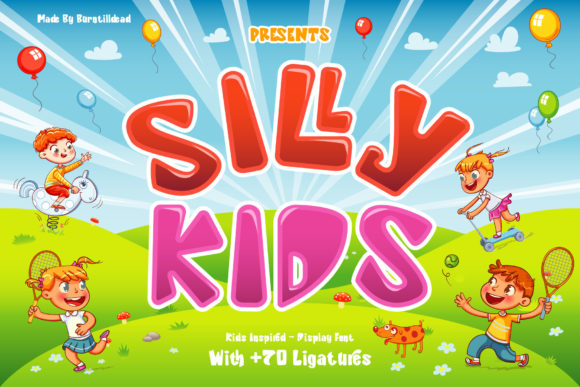
There is a specific kind of energy that only a well-chosen typeface can bring to a project. It isn't just about legibility or adhering to grid systems; it's about personality. When you are working on a coloring book, designing apparel for a toddler, or creating a brand identity for a children's educational app, the visual voice needs to be distinct. Silly Kids enters this space not as a rigid grid of letters, but as a charming display font with uneven and playful characters that immediately signal fun and creativity.
This typeface is designed to break the monotony of standard sans serif fonts without sacrificing readability in large sizes. Its uneven strokes and whimsical forms make it an ideal choice for projects where you want to evoke a sense of wonder or humor. Whether you are a graphic designer looking for a unique asset, a small business owner launching a kids' product line, or a blogger adding flair to your posts, understanding how to leverage a creative font like Silly Kids can elevate your work significantly.
Visual Personality and Design Characteristics
At first glance, Silly Kids feels hand-drawn, yet it retains the structural integrity of a digital typeface. The defining characteristic of this font is its irregularity. Unlike geometric sans serifs that prioritize perfect circles and straight lines, Silly Kids embraces imperfection. The characters vary slightly in weight and alignment, mimicking the natural variations found in a child's handwriting or a quick sketch.
This "uneven" quality is what gives the font its charm. It avoids the sterile look often associated with corporate branding, making it instantly approachable. The playful nature of the glyphs suggests movement and spontaneity. For designers who have spent years wrestling with overly serious typography, Silly Kids offers a breath of fresh air. It is a premium font that manages to feel casual and accessible while still being polished enough for professional use.
The font's style leans heavily into the display font category. This means it is intended for headlines, titles, and short bursts of text rather than body copy. Trying to set a novel or a long-form article in Silly Kids would likely result in eye strain and confusion. However, used correctly as a headline or a logo element, it commands attention. The visual hierarchy it creates is strong; a single word in this typeface can anchor a design layout, drawing the viewer's eye immediately.
Strategic Applications Across Industries
The versatility of Silly Kids extends far beyond simple novelty. While its name suggests it is limited to children's products, its application is broader when viewed through the lens of brand strategy and marketing. The key lies in matching the font's personality with the right medium.
- Publishing and Editorial Design: For children's books, activity booklets, and educational materials, this font is a natural fit. It sets the tone before a single word is read. In editorial design, using Silly Kids for chapter headers or pull quotes can break up dense text and keep young readers engaged.
- Apparel and Merchandise: T-shirts, tote bags, and stickers benefit from the handwritten aesthetic of this typeface. It adds a touch of quirkiness that resonates with parents and children alike. The playful curves work exceptionally well on curved surfaces like caps or rounded garment prints.
- Web Design and Social Media: In the digital realm, attention spans are short. A creative font like Silly Kids can serve as a powerful hook in social media graphics, banners, and landing page hero sections. It signals to the user that the content is lighthearted and entertaining.
- Branding and Logo Design: For startups targeting families, schools, or toy manufacturers, Silly Kids can form the core of a brand identity. It conveys trustworthiness mixed with fun, suggesting a company that cares about its audience but doesn't take itself too seriously.
Even in packaging design, this typeface stands out on crowded shelves. Its unique shape allows it to differentiate a product from competitors who rely on generic block letters. The ability to customize the look with swashes further enhances its utility in these high-stakes visual environments.
Technical Advantages and Accessibility
One of the most practical features of Silly Kids is its encoding method. Being PUA encoded (Private Use Area) ensures that all glyphs, swashes, and alternate characters are accessible with ease. This technical detail matters more than it might sound at first glance. In many handwritten fonts, accessing special characters requires complex workarounds or third-party software. With Silly Kids, the entire character set is available directly within standard design applications.
This accessibility allows designers to fully utilize the font's potential without technical friction. You can easily swap standard letters for their swash counterparts to create custom ligatures or decorative elements. This level of control is essential for maintaining consistency across a brand's visual language. Whether you are designing a logo or a full suite of marketing collateral, having a robust set of design assets at your fingertips streamlines the workflow.
Practical Guidance for Implementation
Choosing the right typeface is rarely about finding the "best" one; it is about finding the right fit for the context. Before committing to Silly Kids for a major project, consider the following practical steps to ensure success.
Evaluate Project Fit: Ask yourself if the message aligns with the mood. If you are designing a serious financial report or a medical brochure, Silly Kids will undermine your credibility. However, if the goal is to engage, entertain, or simplify complex information for a younger audience, it is an excellent tool. Always test the font against the background color and surrounding imagery to ensure it doesn't clash.
Master Font Pairing: A common mistake is trying to let Silly Kids do all the heavy lifting. Because it is so expressive, it works best when paired with a neutral, highly readable serif font or a clean sans serif font for body text. The contrast between the playful headline and the structured body copy creates a balanced composition. For example, pairing Silly Kids with a simple geometric sans serif can modernize the look, preventing it from appearing too childish.
Review Included Styles: Take time to explore every glyph included in the package. Look for the swashes and alternates that can add variation to your designs. Using the same letter repeatedly can make a design feel static. Introducing a few swash variants can add a layer of sophistication and intentionality to your work.
Consider Readability and Commercial Licensing: Even though Silly Kids is playful, it must remain legible at various sizes. Test your designs in black and white to ensure the characters don't merge together. Furthermore, always verify the commercial licensing terms. As a commercial font, proper usage rights are crucial for protecting your business and respecting the creator's intellectual property.
In the world of design, the difference between a good project and a great one often comes down to the details. Silly Kids offers a unique opportunity to inject personality into your work without compromising on quality. By understanding its strengths and applying it thoughtfully, you can create visuals that resonate deeply with your audience. Whether you are crafting a storybook or launching a new product line, this font provides the playful foundation needed to stand out in a crowded marketplace.