Evaluating Yakubh for Modern Branding and Creative Projects
In the landscape of digital design, selecting the right typeface is often the difference between a project that feels generic and one that resonates with its intended audience. For creative agencies and designers seeking a font that balances boldness with structural integrity, Yakubh has emerged as a notable option. This modern display typeface is specifically engineered to support innovative design concepts while maintaining a high standard of minimalism. Whether you are working on big banners, headlines, or classic decorative typography designs, understanding the specific capabilities and limitations of this all-caps font is essential for making an informed decision.
What Defines Yakubh?
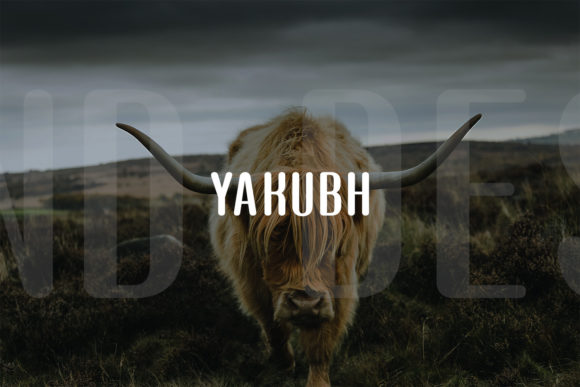
Yakubh is a distinctively crafted all-caps display typeface. Unlike variable fonts that offer extensive weight ranges or optical sizes, Yakubh focuses on a singular, powerful aesthetic: uppercase letters designed for maximum impact. The font was developed with a focus on precision, aiming to keep minimalism at its level best. This means that every curve, stroke, and negative space within the letterforms is calculated to reduce visual clutter while retaining character.
The design philosophy behind Yakubh suggests it is not merely a collection of characters but a tool for establishing a strong visual hierarchy. It is particularly suited for scenarios where text must stand alone without the support of complex surrounding graphics. Because it is an all-caps font, it naturally commands attention, making it ideal for display purposes where immediate recognition is required.
Primary Use Cases and Applications
When evaluating whether Yakubh fits your current project, consider the specific roles typography plays in your workflow. Based on its structural characteristics, this typeface excels in several key areas:
- Headlines and Big Banners: The robust nature of the letterforms makes them highly legible even at large scales. For landing pages, event posters, or hero sections in web design, Yakubh provides the necessary weight to anchor the composition.
- Brand Identity for Creative Agencies: Agencies often require a typographic voice that signals innovation and confidence. The unique geometry of Yakubh can serve as a signature element in logos or brand guidelines, distinguishing the agency from competitors using more traditional serif or sans-serif fonts.
- Subheadings and Notes: While primarily a display font, its clean lines allow it to function effectively as a subheading or for highlighting specific notes within a layout. It creates a clear distinction between body copy and emphasized text without disrupting the overall flow.
- Classic Decorative Typography Designs: Despite its modern origins, the font possesses a timeless quality that aligns well with classic decorative styles. Designers can leverage its geometric purity to create vintage-inspired layouts that do not feel dated.
Benefits of Choosing Yakubh
Selecting a typeface involves weighing various factors, including versatility, readability, and aesthetic alignment. Yakubh offers several distinct advantages for designers who prioritize a minimalist approach.
First, the font's commitment to minimalism ensures that it does not compete with imagery. In projects where photography or complex illustrations are central, a heavy or ornate font can create visual noise. Yakubh cuts through this noise by offering a clean, unadorned appearance that supports rather than distracts. This makes it a practical choice for brands that want their message to be direct and unambiguous.
Secondly, the all-caps construction simplifies the design process for certain applications. When a designer needs to ensure uniformity across a headline or a banner, having a font that looks intentional and balanced in uppercase eliminates the need for manual kerning adjustments that are often required when mixing case styles. This efficiency can be crucial during tight production schedules.
Tradeoffs and Considerations
While Yakubh is a strong contender for display work, it is not a universal solution. Understanding its limitations is just as important as recognizing its strengths. The most significant consideration is its restriction to uppercase letters. For long-form content such as articles, blog posts, or detailed reports, Yakubh is generally unsuitable. Reading large blocks of text in all caps is cognitively more demanding for the human eye and can lead to fatigue.
Additionally, because the font is optimized for display and headlines, it may lack the fine details required for very small point sizes. If your project requires text that will be rendered at less than 14 points, the geometric shapes might lose their definition, resulting in a muddy or pixelated appearance. Designers must test the font at actual usage sizes before committing to it for multi-purpose documents.
Another factor to consider is the tonal shift associated with all-caps typography. Uppercase text inherently sounds louder and more assertive than mixed-case text. If a brand aims for a conversational, friendly, or approachable tone, relying too heavily on Yakubh could make the communication feel aggressive or distant. It is a font that conveys authority and structure, which may not align with every brand personality.
Comparative Analysis: When to Choose Alternatives
To determine if Yakubh is the right fit, it is helpful to compare it against other categories of typefaces. If your project requires extensive body copy, a dedicated text family like a grotesque sans-serif or a humanist serif would be a more appropriate choice. These fonts are designed with x-heights and counters that facilitate rapid reading over long periods.
Furthermore, if your design concept relies on subtle nuances of emotion or warmth, a more organic or rounded font might yield better results. Yakubh is defined by its precision and passion for geometry; it does not typically offer the soft, hand-drawn qualities found in script or brush fonts. Therefore, for projects requiring a sense of whimsy or personal touch, alternatives should be explored.
However, if the goal is to create a striking contrast between a modern, minimalist background and bold, authoritative text, Yakubh remains a superior option. It fills a specific niche that few other fonts occupy: the intersection of classic decorative aesthetics and modern functional minimalism.
Practical Decision-Making Insights
Before integrating Yakubh into a project, designers should conduct a series of practical tests. Start by applying the font to your primary headline and then downscaling it to see how it behaves at smaller sizes. Check the legibility of the "all-caps" constraint within the context of your specific language and character set. Ensure that the spacing (kerning) remains consistent across different word combinations, as some display fonts can exhibit uneven gaps between certain letter pairs.
It is also advisable to pair Yakubh with a neutral, highly readable body font. A common strategy is to use Yakubh for the visual hook and a simple sans-serif for the explanatory text. This combination leverages the strengths of both: the impact of the display font and the clarity of the text font. This pairing ensures that the design remains accessible while still maintaining a strong brand identity.
Conclusion
Yakubh represents a specialized tool in the designer's toolkit. It is not a replacement for a comprehensive type system but serves as a powerful accent for specific, high-impact applications. For creative agencies and innovators looking to elevate their branding through minimalism and bold display typography, Yakubh offers a compelling solution. By carefully considering the tradeoffs regarding readability and tone, designers can effectively utilize this font to create memorable and professional visual communications.
Ultimately, the decision to use Yakubh should be driven by the specific goals of the project. If the objective is to create a statement, define a boundary, or highlight a key message with clarity and style, this typeface delivers on its promise. However, for tasks requiring subtlety and extended reading, alternative solutions remain the prudent choice.