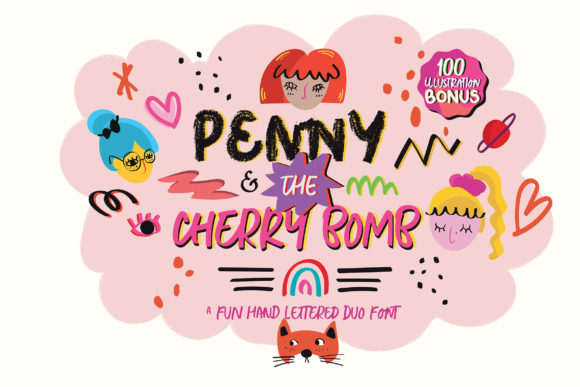
Bringing Authentic Hand-Drawn Charm to Your Designs with Penny the Cherry Bomb
In a digital landscape saturated with uniform, pixel-perfect typefaces, there is a growing demand for designs that feel human, tactile, and genuinely personal. This shift has given rise to the resurgence of display fonts that mimic handwriting, chalkboards, and hand-painted signage. Among the most versatile and character-rich options available today is Penny the Cherry Bomb. This unique display duo combines a regular weight with a distinct chalk-like texture, offering designers a powerful tool to inject authenticity into their projects.
The appeal of this font lies not just in its aesthetic, but in its ability to bridge the gap between professional polish and casual creativity. Whether you are a graphic designer looking to elevate a brand identity, an educator creating engaging classroom materials, or a small business owner crafting marketing collateral, understanding how to leverage a font like Penny the Cherry Bomb can transform the visual impact of your work. It is more than just a typeface; it is a design element that carries emotional weight and narrative potential.
The Anatomy of a Display Duo: Regular and Chalk
To fully appreciate the utility of Penny the Cherry Bomb, one must first understand its dual nature. Unlike standard monolinear fonts that maintain a consistent stroke width, this duo presents two distinct yet harmonious personalities within a single family. The regular component offers a solid, readable foundation that retains the whimsical structure of a hand-drawn letterform without sacrificing legibility at smaller sizes.
However, the true standout feature is the chalk-like variation. This specific stylistic set mimics the granular texture and uneven pressure of writing on a slate or blackboard. When applied correctly, it creates a sense of depth and imperfection that is impossible to achieve with vector-based sans-serif fonts. The irregular edges simulate the way pigment catches on rough surfaces, adding a layer of realism that immediately signals "handmade" to the viewer.
The combination of a stable regular weight and a textured chalk variant allows for dynamic typographic hierarchy without needing to switch font families entirely.
This duality is crucial for modern layout design. A designer can use the regular version for body text or secondary headlines where clarity is paramount, while reserving the chalk style for primary attention-grabbing elements. This approach ensures that the design remains accessible while still delivering a strong artistic statement. The font avoids the trap of being purely decorative by maintaining a structural integrity that supports reading flow.
Why Authenticity Matters in Modern Design
We live in an era of algorithmic perfection. Social media feeds, e-commerce sites, and corporate websites are often dominated by clean, geometric, and highly optimized typography. While efficient, this homogeneity can lead to visual fatigue. Consumers are increasingly drawn to content that feels authentic, raw, and unpolished. They crave a connection to the creator behind the message.
Penny the Cherry Bomb addresses this psychological need directly. By introducing the visual cues of manual creation, the font triggers a sense of trust and intimacy. When a user sees a font that looks like it was written with a piece of chalk or painted by hand, they subconsciously perceive the brand or project as more approachable and less corporate. This is particularly effective for businesses that want to emphasize craftsmanship, local roots, or personal care.
The realistic feel of the chalk texture serves as a subtle reminder of physical presence. In a world where so much interaction happens on screens, having a design element that evokes the sensory experience of touch can be a powerful differentiator. It grounds the digital interface in the physical world, making the information feel more tangible and memorable.
Practical Applications Across Industries
The versatility of this font family makes it suitable for a wide array of sectors. Its application goes far beyond simple novelty; it solves specific communication problems in various fields.
- Retail and Hospitality: Cafes, bakeries, and boutique shops often use chalkboard-style fonts to list daily specials or menu items. Using Penny the Cherry Bomb in these contexts provides a cohesive look that matches the actual physical signage found in-store. Digital menus displayed on tablets or websites benefit from this consistency, creating a seamless brand experience from the sidewalk to the screen.
- Educational Materials: Teachers and instructional designers frequently seek fonts that mimic classroom environments. For worksheets, presentation slides, or educational apps, the chalk-like quality of this font can make learning materials feel less formal and more inviting for students. It helps break down the barrier between instructor and learner, fostering a collaborative atmosphere.
- Event Planning and Invitations: Weddings, birthday parties, and community events often require a warm, celebratory tone. The playful yet structured nature of Penny the Cherry Bomb works exceptionally well for invitations, signage, and promotional banners. It adds a festive flair that feels curated rather than mass-produced.
- Social Media Content: Content creators on platforms like Instagram and Pinterest rely heavily on visual storytelling. Overlaying quotes, announcements, or highlights with this font can significantly increase engagement rates. The unique texture stands out against the clean backgrounds typical of social feeds, drawing the eye and encouraging users to pause and read.
Implementing the Font for Maximum Impact
While the aesthetic qualities of Penny the Cherry Bomb are evident, using it effectively requires a strategic approach to hierarchy and contrast. Because the font possesses such a strong personality, it should not be overused. Treating it as a headline or accent font is generally the most successful strategy.
When pairing this display font with other typefaces, it is essential to choose companions that complement its organic nature. A clean, neutral sans-serif or a classic serif works best. These neutral partners provide a calm backdrop that allows the intricate details of the chalk texture to shine without competing for attention. Avoid pairing it with other display fonts that have similar levels of ornamentation, as this can create visual clutter and reduce readability.
Color selection also plays a pivotal role in realizing the full potential of the font's texture. The chalk effect is designed to interact with background colors that simulate physical surfaces. Deep blues, blacks, or dark greens paired with white or pastel versions of the font will maximize the illusion of a chalkboard. Conversely, using lighter background colors can highlight the regular weight of the font, emphasizing its handwritten charm.
Considerations for Web and Print
One of the advantages of Penny the Cherry Bomb is its adaptability across different mediums. In print, the high-resolution rendering captures every nuance of the grainy texture, making it ideal for posters, flyers, and packaging. The tactile quality translates beautifully to paper, enhancing the perceived value of the printed material.
On the web, however, considerations regarding file size and rendering become important. High-detail textures can sometimes increase load times if not optimized properly. Designers should ensure that the font files are compressed efficiently. Additionally, testing the font at various screen sizes is crucial. While the regular weight is generally legible at small sizes, the chalk variant may lose some of its textural detail on lower-resolution displays. In such cases, relying on the regular weight for navigation or small text blocks ensures a better user experience.
The Psychology of Imperfection
There is a profound psychological reason why fonts like Penny the Cherry Bomb resonate so deeply with audiences. Perfection can sometimes feel cold or intimidating. Human beings are wired to connect with things that show signs of life and effort. Slight irregularities in stroke width, uneven baselines, and simulated dust or grain all contribute to what psychologists might call the "principle of imperfection."
By incorporating these flaws intentionally, designers signal that there is a human hand behind the design. This builds rapport with the audience. It suggests that the product or service being offered is made with care, not churned out by a machine. For hobbyists, artists, and independent creators, this is a vital asset. It allows them to compete visually with larger corporations by leveraging their unique, personal touch.
The "Cherry Bomb" aspect of the name itself implies energy and excitement. The font captures this spirit through its dynamic curves and bold strokes. It is not a passive font; it demands attention. When used in headlines, it acts as a visual exclamation point, guiding the reader's eye and emphasizing the importance of the message.
Balancing Style and Functionality
Despite its expressive nature, the font maintains a level of functionality that prevents it from becoming a gimmick. The letterforms are constructed with enough stability to remain recognizable even when stretched or manipulated. This robustness is essential for designers who need to scale their work from business cards to billboards.
However, caution is advised when using the font in long-form text. The chalk texture and the inherent playfulness of the letter shapes can become distracting when read in large blocks. The goal is to guide the reader, not to tire them out. Use the font for titles, pull quotes, captions, and key phrases. Let the supporting text do the heavy lifting of information delivery.
Furthermore, accessibility should always be a priority. Ensure that the contrast between the text color and the background is sufficient for users with visual impairments. The grainy texture of the chalk variant can sometimes reduce the sharpness of the edges, so choosing high-contrast color combinations is non-negotiable for inclusive design.
Conclusion: Elevating Your Visual Narrative
Penny the Cherry Bomb represents a thoughtful intersection of artistry and utility. It offers designers a reliable way to infuse their work with warmth, personality, and a touch of nostalgia. In a market that is constantly evolving, the ability to stand out through authentic design choices is more valuable than ever.
Whether you are crafting a campaign for a local bakery, designing a curriculum for a creative workshop, or simply trying to add a unique flair to your personal blog, this font provides the tools necessary to tell your story effectively. By understanding its characteristics and applying it with intention, you can create designs that not only look beautiful but also connect deeply with your audience. The result is a visual language that speaks clearly, warmly, and unmistakably human.